
Last updated November 15, 2026
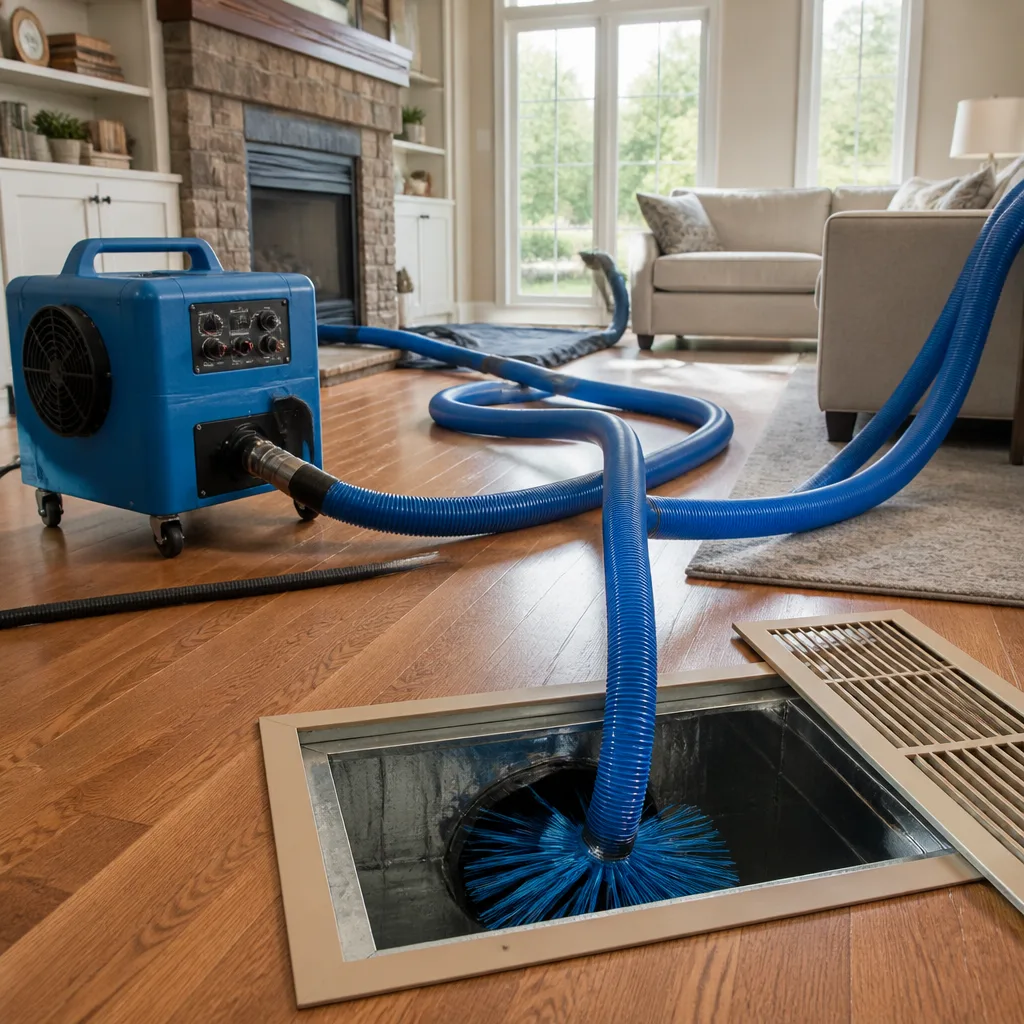 Whole-home duct cleaning
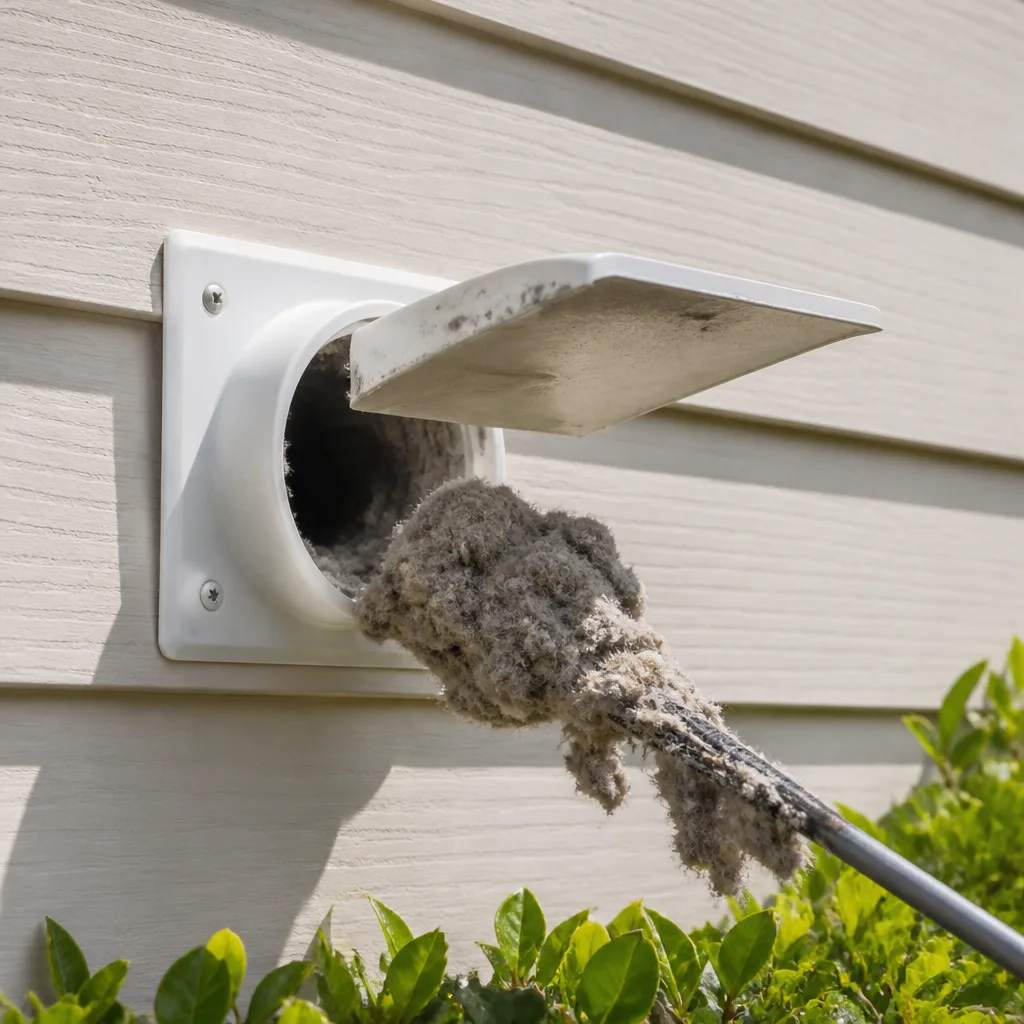 Dryer vent cleaning
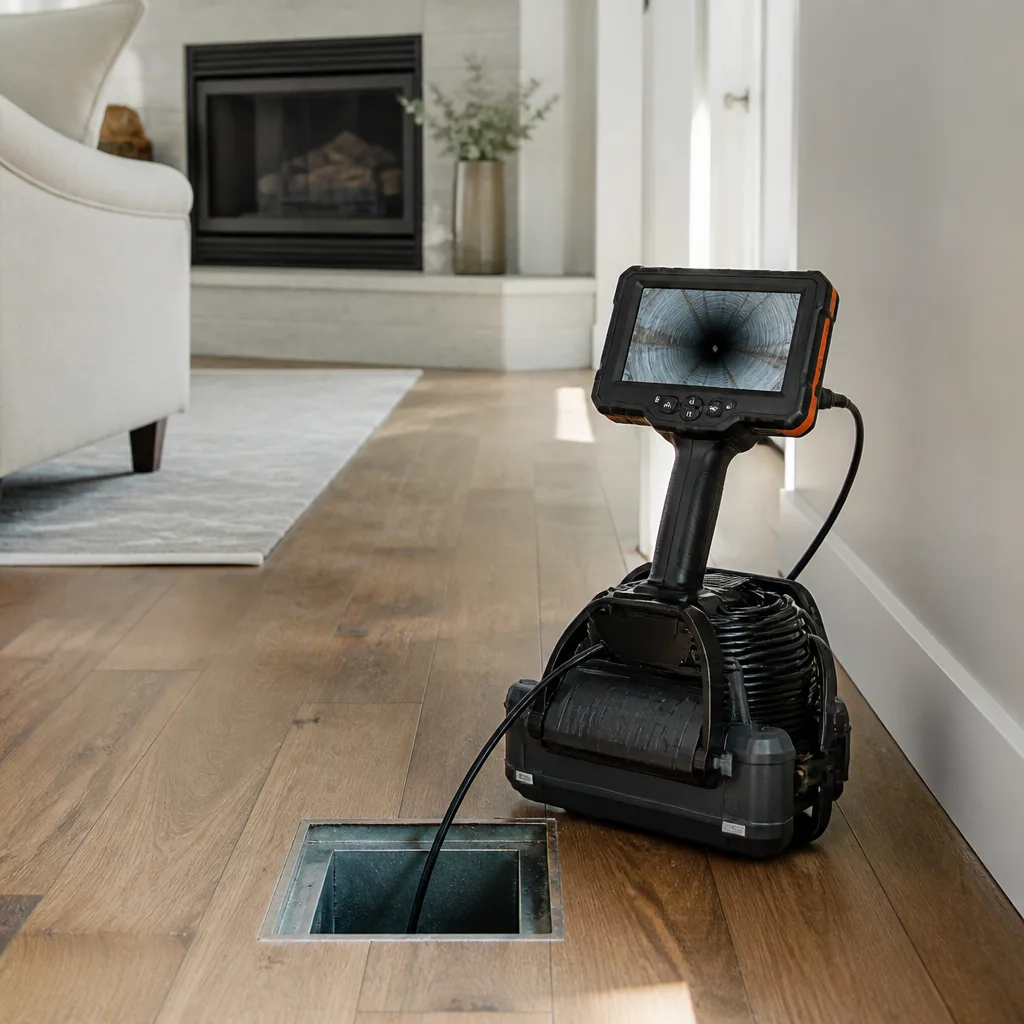 Camera inspection
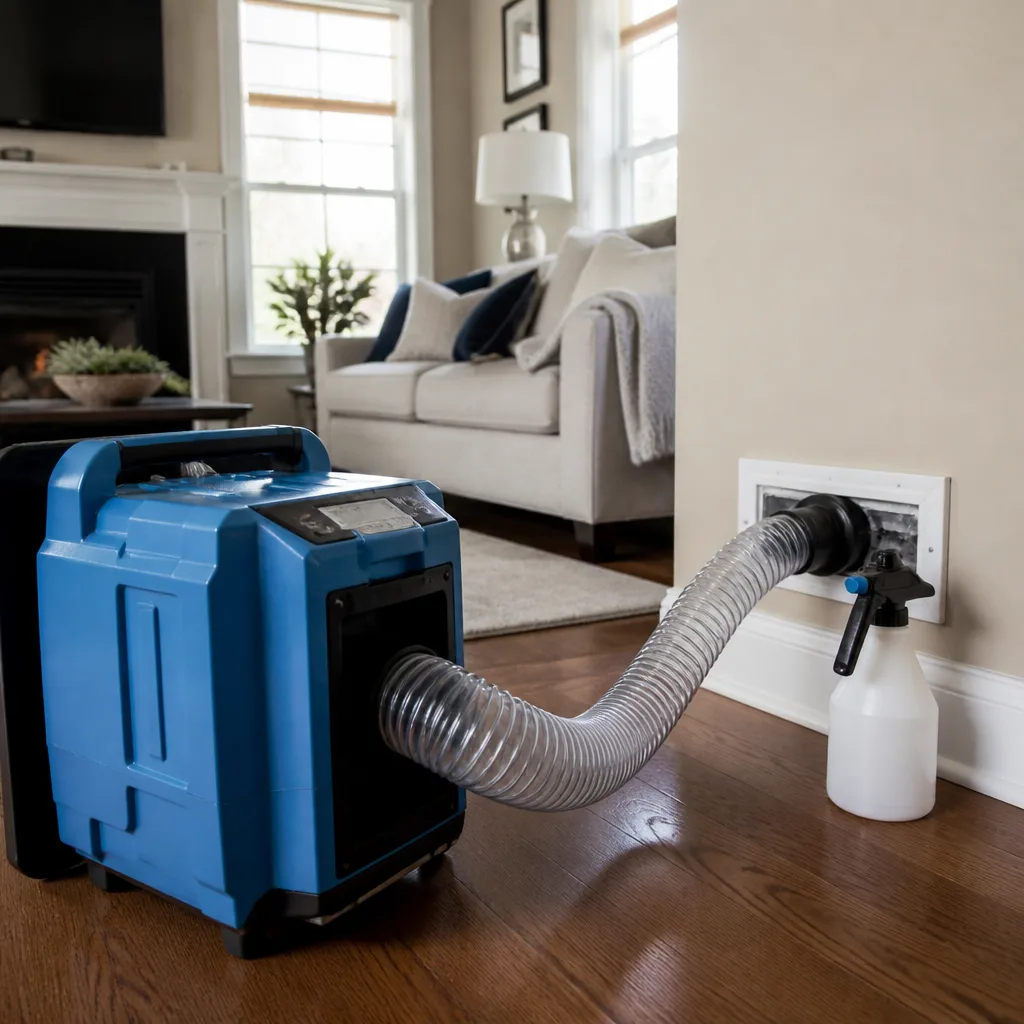 Sanitizing & deodorizing
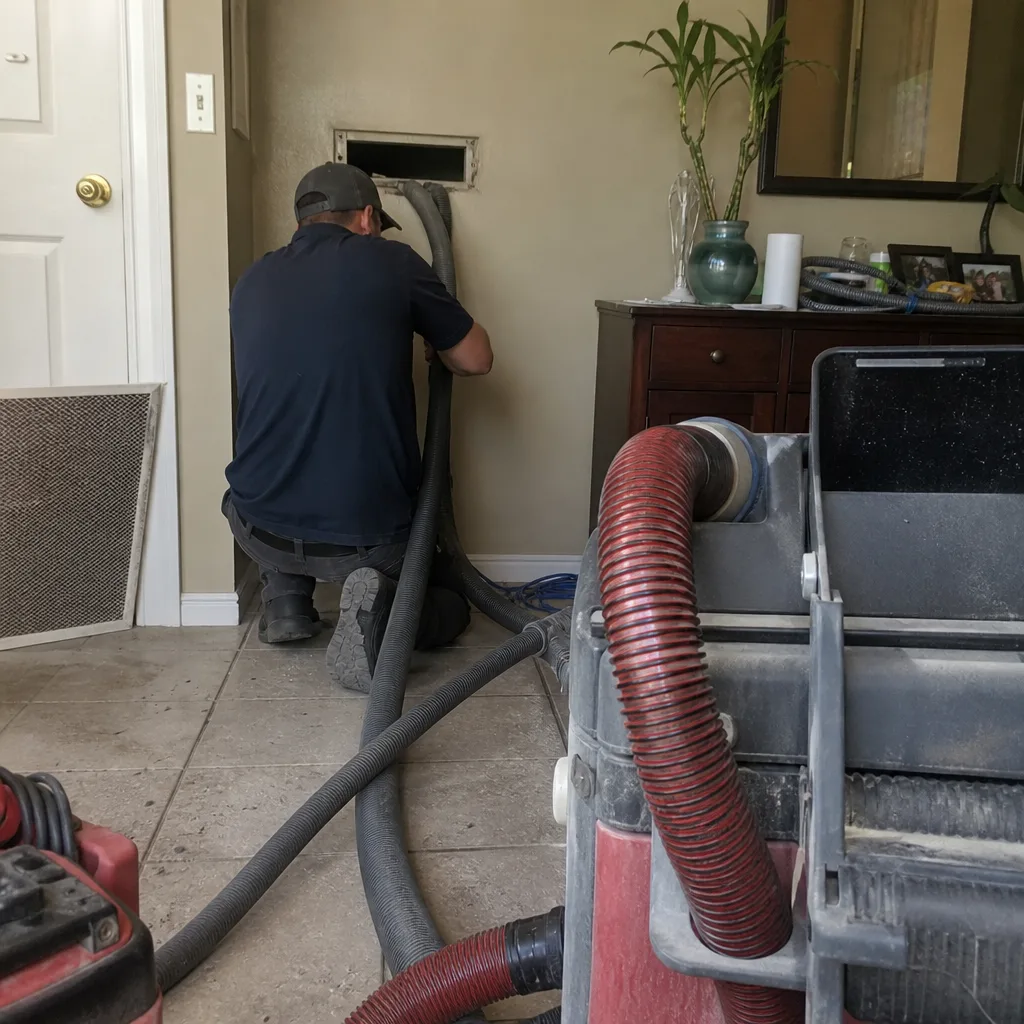
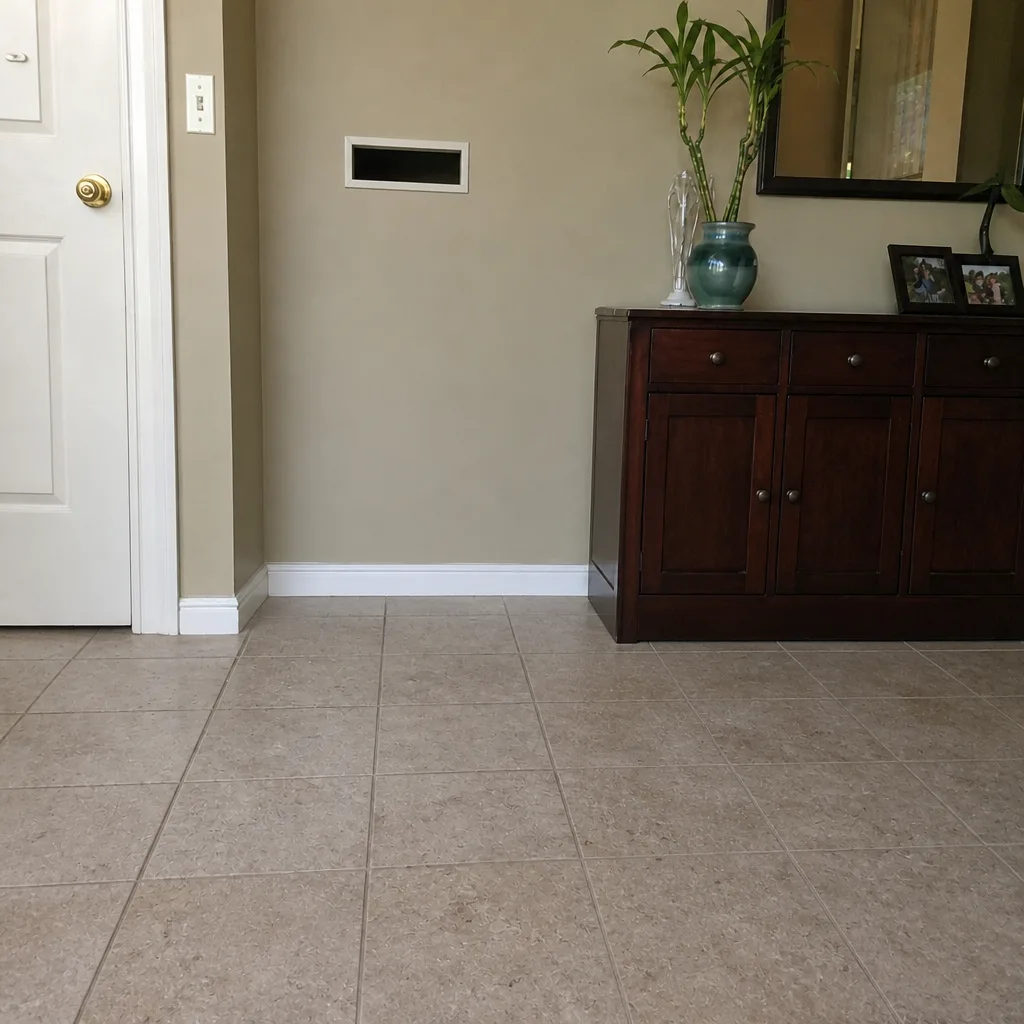
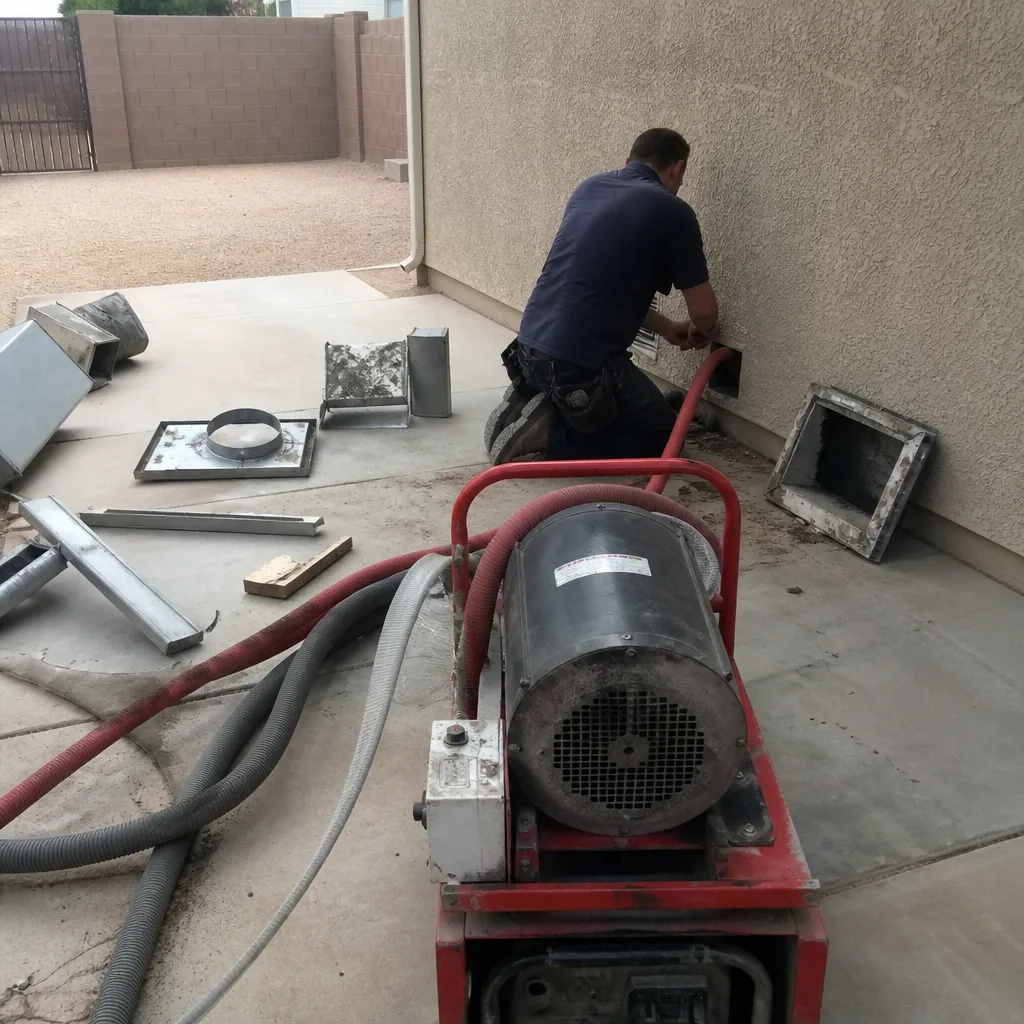
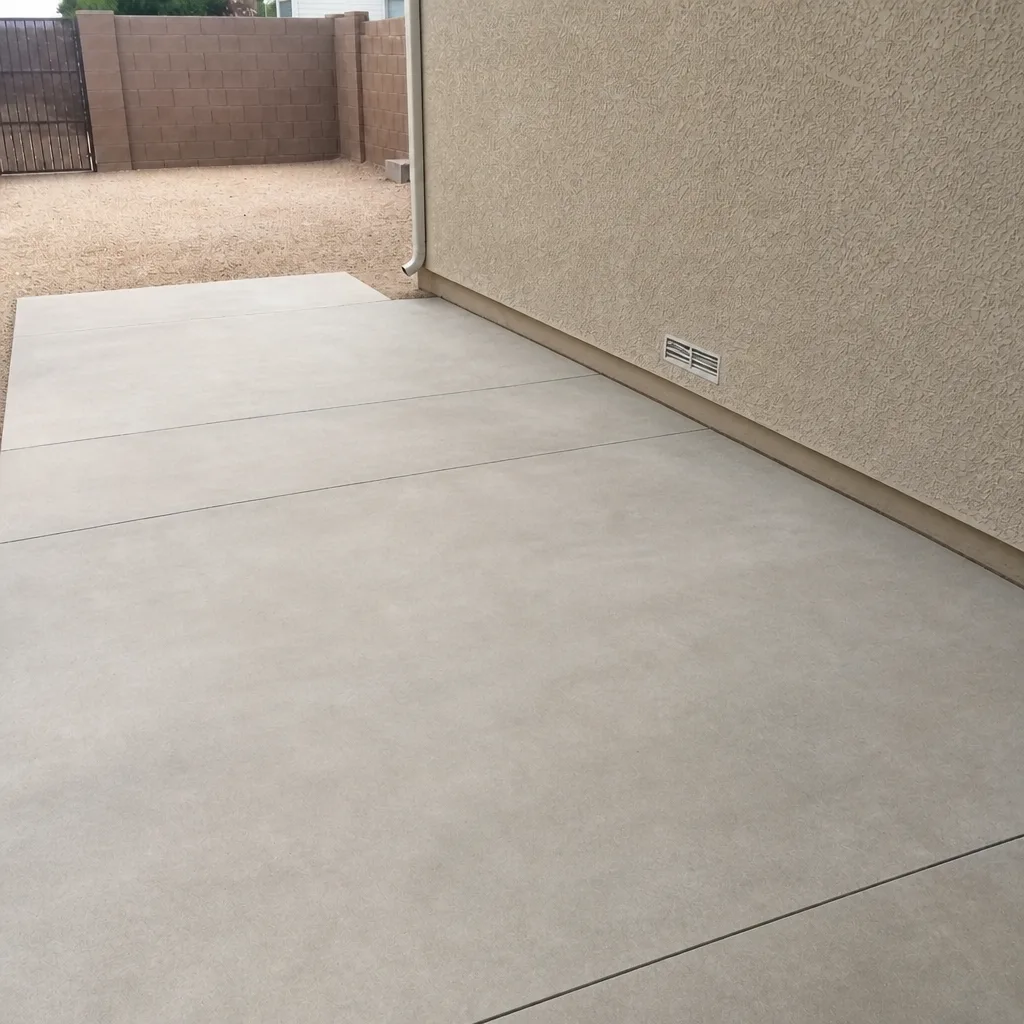
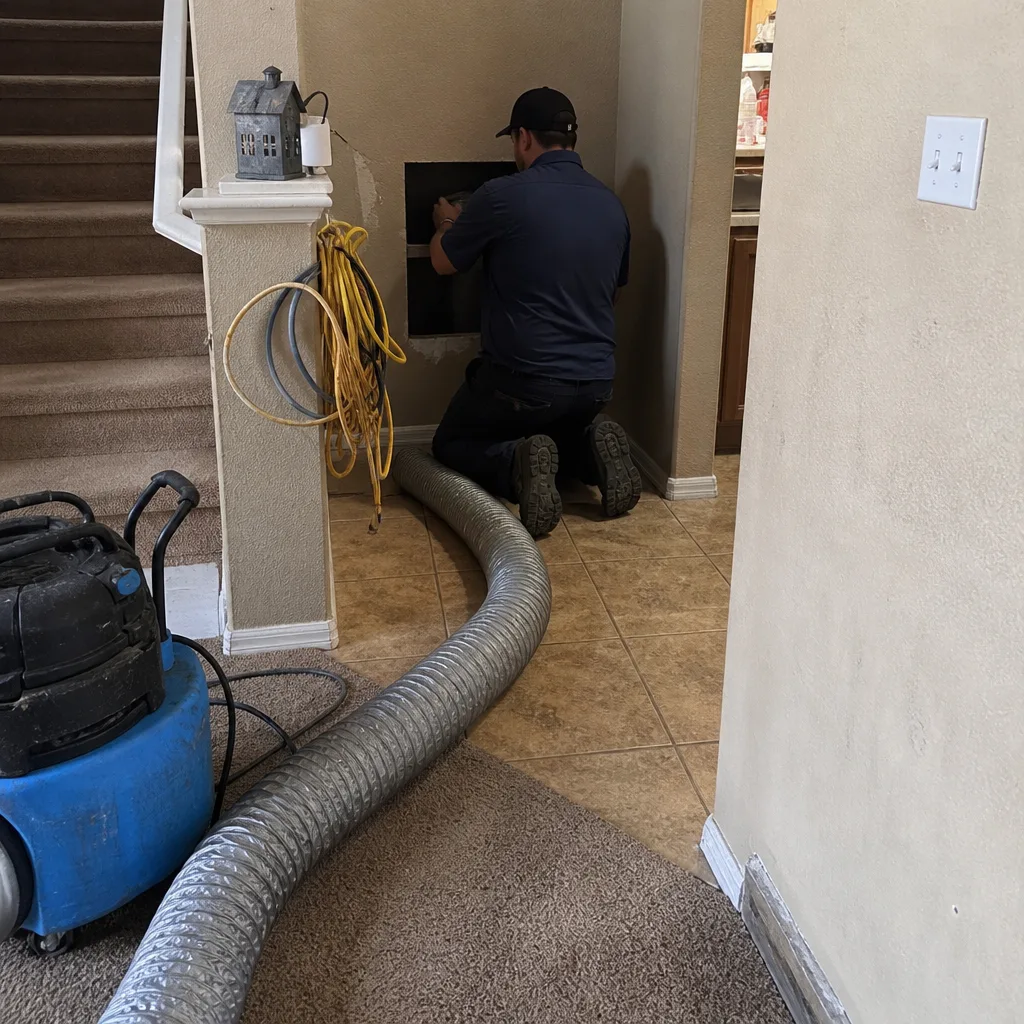
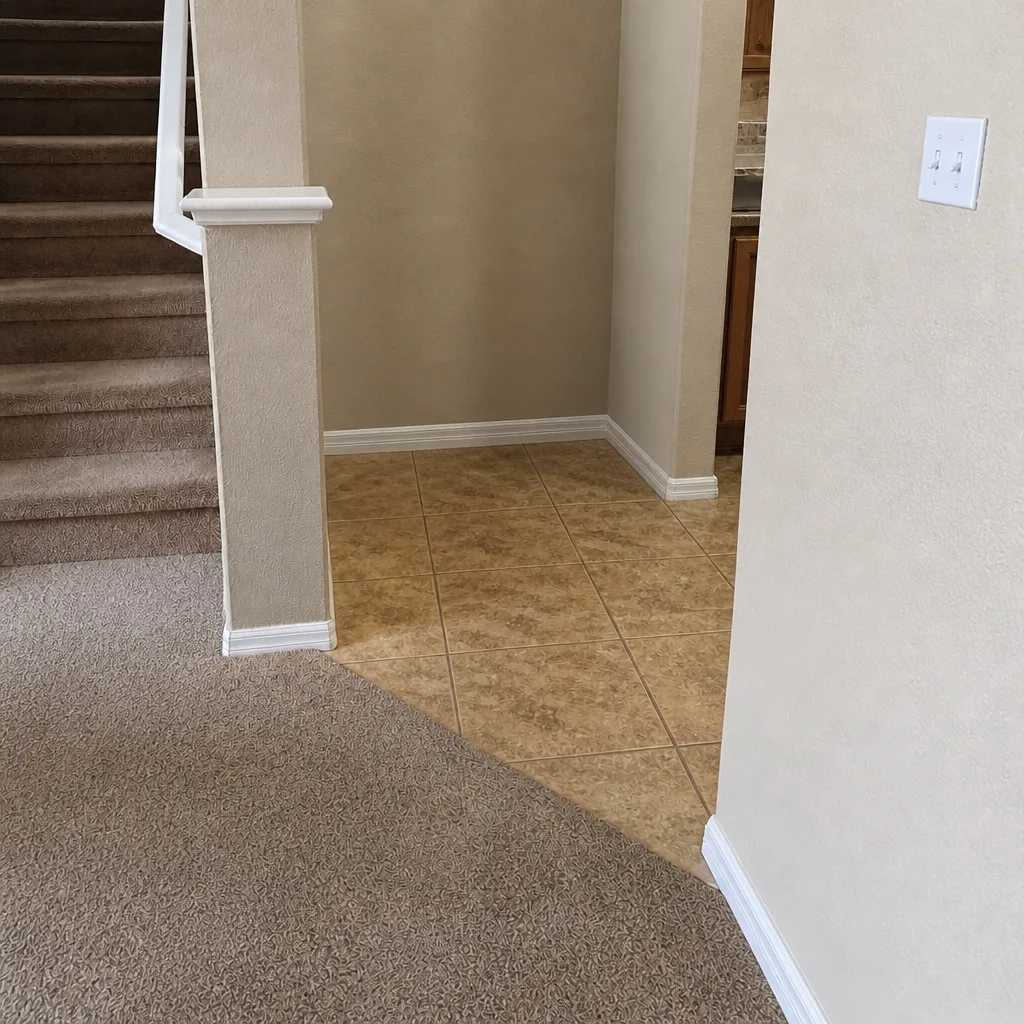
Whole-system duct and dryer vent check with before-and-after photos - you see exactly what came out of your vents
That "$99 whole-house special" is a bait ad - the real number appears once they are in your hallway, or the "clean" is a shop-vac at the register. We photograph the inside of your ducts before and after instead.
Choosing the Right Air Duct Cleaning Brand: A Buyer’s Guide for Surprise
Most homeowners judge a duct cleaning company by the truck, the coupon, or the price on the phone. The companies worth hiring are better judged by what they recommend once they’re inside your home. If a company suggests a “duct coating” or an “antimicrobial fog” as a standard add-on without telling you the specific EPA-registered product, the dose, and why your system needs it, that’s a revenue line, not an air quality recommendation. This guide breaks down the equipment categories and product brands that have real performance data behind them, how to check whether a recommended upgrade is sized for your system, and how to avoid paying for add-ons that do nothing measurable in a Surprise home. You’ll finish knowing exactly what to ask before you book.
Quick Answer
The right duct cleaning brand in Surprise is one that names its equipment (Rotobrush agitation, Nikro HEPA extraction, Abatement Technologies containment), specifies filtration and purification products by model and rating rather than generic labels, and explains how any recommended upgrade fits your existing blower and static pressure. If a company can’t name the tools and products it will use in your home, that’s the first sign the recommendation is a package, not a plan.
Styles & brands we work with
- Whole-home duct cleaning
- Dryer vent cleaning
- Camera inspection
- Sanitizing & deodorizing
Table of Contents
- Why equipment categories matter more than brand names on a truck
- The four IAQ product categories with real evidence behind them
- How to evaluate a filtration upgrade recommendation by MERV and static pressure
- What to ask when a contractor recommends a UV-C system
- Brands professional IAQ contractors specify versus private-label upsells
- How to tell if a product is sized for your system or one-size-fits-all
- Local context: why Surprise homes need a different conversation
- Common mistakes to avoid
Why Equipment Categories Matter More Than Brand Names on a Truck
Duct cleaning has three distinct jobs: agitate the debris off the walls, pull it out without letting it back into the room, and confirm the system is intact when you’re done. A company that only does one of those is doing a partial job, no matter how glossy the branding.
The mechanical agitation side is where most cheap services cut corners. Consumer-grade vacuums and shop-vac setups don’t have the airflow to break debris free from duct walls, so the tech runs a hose through and calls it done. Contractor-grade agitation equipment, such as a Rotobrush rotary brush system, physically contacts the duct wall and knocks contamination loose so the extraction can carry it away.
The extraction side matters just as much. HEPA-rated vacuum systems capture particles at the source rather than exhausting fine dust back into the living space while work is happening. That distinction matters most in homes with allergy sufferers, new babies, or anyone with respiratory sensitivity.
For jobs with contaminated environments, whether from a renovation, a moisture event, or another remediation scenario, proper containment changes the risk profile entirely. Negative-pressure containment equipment, like the systems Abatement Technologies builds, keeps contaminated air moving away from occupied rooms rather than through them. This is the equipment category we lead with at Duct Cleaning Surprise because it’s the difference between cleaning a system and disturbing one.
Ask any company you’re considering three questions before you book:
- What agitation tool will you use, and is it rotary brush or air-only?
- What kind of vacuum, and is it HEPA-rated?
- If my system turns out to be contaminated, what containment do you have?
A straightforward answer to all three is a much stronger signal than any review score.
The Four IAQ Product Categories With Real Evidence Behind Them
Indoor air quality is a crowded product category. Most of what’s sold as an “IAQ solution” doesn’t have performance data behind it, and some of it is actively unhelpful. Four product categories have genuinely defensible evidence. Everything else deserves scrutiny.
1. MERV-rated filtration
Filtration is the most evidence-backed IAQ intervention available to a homeowner. A filter with a stated MERV rating has been tested against a standard, and the rating tells you what particle sizes it captures. The catch is that higher MERV means higher resistance, and resistance is what your blower has to fight. We’ll cover that in the next section.
2. UV-C air purification
UV-C lamps at the right wavelength and dose can reduce microbial growth on wet surfaces, most commonly the evaporator coil. That’s a real function. What UV-C doesn’t do is clean the air in a room or replace filtration. Any company that markets UV as an air-cleaning device rather than a coil-surface control is overselling.
3. ERV/HRV ventilation
Energy recovery ventilators and heat recovery ventilators bring measured fresh air into a tight home while recovering energy from the exhaust. In a Surprise home with a well-sealed envelope, ventilation is often the missing piece when filtration is already handled. These systems are a design conversation, not a bolt-on, and they belong with a mechanical contractor who can size the unit to your home.
4. EPA-registered sanitizers
Sanitizers do exist as a legitimate post-cleaning step in certain scenarios, but only when the product is EPA-registered, the label rate is followed, and the reason for applying it is specific to your system. Fogging every duct as a standard line item is not an IAQ recommendation, it’s a margin line. Ask for the EPA registration number and the reason. A credible company will have both.
How to Evaluate a Filtration Upgrade Recommendation by MERV and Static Pressure
When a company recommends moving your filter from a standard 1-inch fiberglass panel to a high-MERV media cabinet, the right answer depends on your blower, not the filter’s marketing sheet. Static pressure is the resistance the air stream meets moving through the filter, the ducts, and the coil, and every residential blower has a designed operating range for it. Push past that range and you don’t just lose efficiency, you can shorten blower motor life and create hot and cold spots that weren’t there before.
A proper filtration recommendation follows this sequence:
- Check the current filter’s MERV rating and the filter slot dimensions.
- Measure or estimate the system’s static pressure with the current filter in place.
- Confirm the blower’s rated airflow against the proposed filter’s pressure drop at that airflow.
- Identify whether the return air path can accept a 4-inch or 5-inch media cabinet rather than a 1-inch filter.
- Specify the exact filter model number and MERV rating in the written quote.
- Recheck static pressure after installation and log the reading.
What a real recommendation looks like: “Your blower is rated for 1,200 CFM at 0.5 inches of water column. A MERV 11 4-inch media filter drops 0.12 at that airflow, which fits. A MERV 16 1-inch pleat drops 0.55 and does not.” What an upsell looks like: “We recommend a MERV 16 filter for maximum protection.” No numbers, no system reference, no follow-up check.
Honeywell and Aprilaire both make media filter cabinets that are commonly specified for residential retrofits because they have published pressure drop tables. If a company recommends a specific model from either brand, that’s a good sign. If they recommend a filter with no model number at all, ask for one before you agree.
If you want a filtration upgrade evaluated alongside a cleaning visit, that’s a natural pairing. Our air duct cleaning service includes a system assessment, and we can walk through whether a filter change is worth doing at the same time or whether it should wait.
What to Ask When a Contractor Recommends a UV-C System
UV-C is one of the most oversold upgrades in this trade. A legitimate recommendation includes four specific details. A sales pitch includes none of them.
1. Wavelength
UV-C is a range, not a single value. Effective coil-surface lamps operate in the 254 nm band, and the lamp’s output at that wavelength is what matters. Ask for the nominal wavelength in the quote.
2. Placement relative to the coil
A UV lamp only does its job if it’s aimed at the evaporator coil where moisture and microbial growth accumulate. A lamp mounted in the return plenum or hanging in a supply trunk is not doing coil work. Ask where the lamp will be mounted and whether the quote includes the bracket or target that positions it correctly.
3. Lamp schedule and output degradation
UV-C lamps lose output over time even while they still glow. A responsible quote includes the replacement interval specified by the manufacturer and states whether that interval is based on continuous run or on a schedule tied to blower operation. If the replacement lamp isn’t in the quote, ask what it costs and how often you’ll be buying one.
4. System-specific sizing
One lamp sized for a 2-ton air handler is not adequate for a 4-ton system. The quote should state the tonnage the lamp is rated for and confirm it matches your equipment. Generic “UV purification” packages rarely do this.
If a company recommends a UV system without these four details, treat it as a placeholder recommendation and ask for the specifics in writing. If they can’t produce them, don’t buy the lamp. If they can, you have a real product to evaluate against competitors.
Brands Professional IAQ Contractors Specify Versus Private-Label Upsells
The brand names in a duct cleaning company’s product lineup tell you where their expertise actually sits. There’s a difference between a company that recommends named professional brands and one that recommends “our exclusive antimicrobial” or “our proprietary duct coating.”
Brands that show up in professional recommendations
- Rotobrush – rotary brush agitation systems used across the residential and light-commercial duct cleaning trade.
- Nikro – HEPA-rated vacuum systems with published filtration specifications.
- Abatement Technologies – negative-pressure containment equipment for contaminated-environment work.
- Honeywell and Aprilaire – filtration and ventilation equipment with published performance data for every model.
- Guardsman – filtration products commonly specified in residential air quality systems.
If a company names any of these, ask which specific model they’ll use in your home. A company that uses Rotobrush can tell you which Rotobrush system they run. A company that installs Honeywell filtration can tell you which cabinet.
What private-label products usually signal
Private-label products themselves aren’t automatically bad. The problem is that a private-label product has no published third-party performance data, no listed MERV or wavelength, no available spec sheet for an independent check, and no replacement availability outside the company that sold it. That combination makes it easy to price at a premium and hard for a homeowner to verify. When you see it, ask for the spec sheet. A real product has one.
At Duct Cleaning Surprise, the product conversations we have with homeowners almost always land on the same handful of brands because those are the ones with published data behind them. We’d rather tell you a filter is well-specified than sell you one that isn’t.
How to Tell If a Product Is Sized for Your System or One-Size-Fits-All
One-size-fits-all upsells share a pattern. Here’s how to spot the difference in the quote:
- Sized: the quote names your equipment (tonnage, blower model, filter dimensions) and states why the product matches it.
- Sized: the quote lists manufacturer, model number, and rated capacity.
- Sized: the quote specifies the installation location and any parts required to fit it.
- One-size-fits-all: the quote says “UV purification system” without a model number or tonnage rating.
- One-size-fits-all: the quote describes a benefit (“better air”) without naming what the product does mechanically.
- One-size-fits-all: the quote bundles the upgrade into a package price with no line-item breakdown.
The fastest test is to ask the technician to show you the spec sheet for the product. A company with real product knowledge produces it in seconds. A company selling a package usually can’t.
Local Context: Why Surprise Homes Need a Different Conversation
Surprise sits in the west valley where summer heat pushes air conditioning to run long hours, dust blows in during spring wind events, and many homes are relatively tight thanks to modern construction. Those three factors change what a good IAQ recommendation looks like here compared with a wetter, older climate.
In a Surprise home, a system that runs hard all summer pulls a lot of air through the filter, and a filter that’s undersized for the blower becomes a real efficiency problem fast. That’s why we push homeowners toward a static pressure check before agreeing to any MERV upgrade. We see plenty of systems in Surprise neighborhoods running a 1-inch high-MERV pleat where a 4-inch media cabinet would be the better answer. Getting that wrong costs money every month, not just at install.
Dust exposure also matters. West valley wind events push fine particulate into every return, and homes near the edges of newer development see more of it during grading and construction phases. A proper HEPA extraction pass during cleaning is doing more work in a Surprise home than it would in a climate with more stable air. If you’ve recently had a renovation, the containment question is even more important. Our duct cleaning in Surprise team regularly works in the post-renovation scenarios where negative-pressure protocol is the difference between a clean system and a stirred-up one.
Dryer vents get the same treatment on the local conversation. A ventilation path that runs through an exterior wall in west valley heat and dust accumulates lint faster than homeowners expect. That’s why we include dryer vent cleaning in our service lineup rather than treating it as a separate call. From the duct to the dryer vent, the system gets addressed in one visit rather than fragmented across contractors.
What a Legitimate Duct Cleaning and IAQ Visit Looks Like in Surprise
Homeowners in Surprise come to this guide for one reason: they want to be able to tell a real cleaning visit from a package sale. Here’s what a proper visit covers, in sequence.
- Pre-visit questionnaire. The company asks about allergies, recent renovations, moisture events, and any IAQ complaints before anyone gets on the schedule. This is where the visit starts, not the sales call.
- Source assessment on arrival. The tech opens returns and supply registers, checks for disconnected or crushed flex runs, and photographs anything that will need a recommendation.
- System protection. Registers are covered, return and supply openings are prepped, and containment is set if the system shows signs of contamination.
- Rotary brush agitation. A Rotobrush or equivalent rotary brush system runs through each branch run and the main trunk to break debris loose.
- HEPA extraction. A Nikro HEPA vacuum or equivalent pulls the loosened debris out, with filtration rated to capture fine particulate.
- Filtration assessment. The tech checks the existing filter, its MERV rating, and whether the blower can handle an upgrade without exceeding its static pressure range.
- Post-work photo set. Supply and return interiors are photographed before and after, and the photos come to you.
During a Surprise visit, the temperature inside a return trunk in July can approach the outdoor temperature for the first few minutes before the AC catches up. That’s normal. A tech who’s done this work in Surprise knows to open the system carefully and let airflow do some of the work before agitating. That kind of detail is the difference between a company that does this job locally and one that does it occasionally.
If the assessment turns up a damaged or disconnected run, the visit doesn’t end there. Air duct repair is part of our service because cleaning a compromised system only does so much. We clean it, and if it’s broken, we fix it. That’s the split most duct cleaners don’t offer.
What to Ask Before Booking Any Duct Cleaning Company in Surprise
Ask these six questions before you book. The answers will separate a real company from a package sale faster than any review page.
1. What agitation and vacuum equipment will you use in my home?
You want to hear named systems: rotary brush agitation and HEPA-rated vacuum extraction. If the answer is “professional-grade equipment,” ask for the specific names.
2. Do you do duct repair, or only cleaning?
If they don’t, they’ll either clean a broken system and leave it, or refer you to someone else. Either way, you have a second contractor to coordinate.
3. What containment do you use for renovation or moisture jobs?
Negative-pressure equipment signals that the company understands contaminated-environment protocol. No containment capability means no answer to this question.
4. Which filtration brands do you work with, and can you show me a spec sheet?
A company that specifies Honeywell or Aprilaire can produce the data. A company that recommends a private label usually can’t.
5. Can I see before-and-after photos of my system when the work is done?
This is the single best accountability question. A company that photographs the work can prove the work happened.
6. Will the quote include model numbers, MERV ratings, and installation details?
A written quote with line items and model numbers is a documented recommendation. A verbal quote with a package total isn’t.
Common Mistakes to Avoid
- Judging a company by its price on the phone. The lowest quoted price in Surprise usually reflects a partial service, and the real scope gets added once the tech is on site. Ask what the price covers before comparing numbers.
- Accepting a duct coating without documentation. If a coating is recommended, ask for the EPA registration number and the reason it’s needed for your system specifically. If neither is available, decline.
- Buying a high-MERV filter without a static pressure check. A 1-inch MERV 13 or higher filter on an undersized return is one of the most common efficiency mistakes we see in west valley homes, and it costs you every month.
- Treating UV-C as complete air purification. UV-C has a specific job at the coil. It does not replace filtration or ventilation, and a quote that presents it as a standalone air-cleaning solution is overselling.
- Booking a cleaning when your system needs repair first. Cleaning a disconnected run or a crushed flex duct just moves dust around a broken system. Ask whether the company can identify and fix duct damage before cleaning.
- Skipping the dryer vent. Dryer vents are part of the mechanical ventilation picture, and lint accumulation is a well-documented fire-risk factor everywhere lint meets heat. If a duct cleaning quote doesn’t include a dryer vent assessment, ask why.
- Not asking for after-photos. The single best defense against the industry’s bait-and-switch reputation is a before-and-after photo set of your own ducts. A company that photographs its work has nothing to hide.
See the difference
 Before
 After
 Before
 After
 Before
 After
When to Call a Professional
You should call a professional when your symptoms are consistent rather than occasional. Persistent allergy or asthma flares in one room, a musty smell that returns after cleaning your own filters, visible dust collecting on supply registers within days, or a dryer that takes noticeably longer to dry a load are all signals that the system needs an inspection. Recent renovation or water intrusion is another clear trigger: post-construction dust and moisture events both call for containment-capable cleaning. If you’ve bought a home in Surprise and don’t have a service history for the ducts, an initial inspection is a reasonable step even without symptoms, because the previous owner’s habits are unknown. Duct Cleaning Surprise offers free estimates in Surprise, and our technicians have up to 11 years of experience identifying the difference between a system that needs cleaning and one that needs repair. Call (866) 942-6251. We answer 24/7. Fast dispatch from 7am to 7pm, Sunday through Friday.
Frequently Asked Questions
Residential duct cleaning in Surprise typically falls into a range based on the number of runs, system accessibility, and whether repair or containment is needed. We price per system rather than per vent, and the written estimate sets the final price. Because the scope varies by home, we’d rather give you an honest whole-system range after an assessment than a teaser number on the phone. Call (866) 942-6251 for an exact quote – estimates are free.
Cheaper quotes usually reflect a narrower service: air-only agitation without rotary brush contact, non-HEPA extraction, no containment capability, and no repair follow-through if damage turns up. The headline price covers a partial job, and the rest of the scope appears as add-ons once the tech is inside. One flat price per system, agreed before work starts, closes that gap. Call (866) 942-6251 for a full-scope estimate.
Ask for before-and-after photos of your own ducts, not stock images. A company that photographs each branch run and the return trunk has documented the work, and you can compare what you see against what you were quoted. We include a photo set with every cleaning. Call (866) 942-6251 to book an assessment.
Most homes go three to five years between cleanings, but a Surprise home with pets, recent renovation, or noticeable dust accumulation often needs an earlier visit. Homes near active construction in the newer west valley developments can accumulate fine particulate faster than the general guideline suggests. A visual assessment settles it. Call (866) 942-6251 for a free estimate.
Sometimes yes, sometimes no. The filter upgrade is worth doing when the current filter is undersized for the blower or when the return air path can accept a 4-inch media cabinet. It’s worth skipping when the blower’s static pressure is already near its limit and a higher-MERV filter would push it over. A static pressure check during the visit answers the question. Call (866) 942-6251 and we’ll include the check in the assessment.
UV-C is a legitimate addition when the evaporator coil is showing microbial growth or when a homeowner specifically wants coil-surface control in a high-humidity season. It’s not a replacement for filtration, and it’s not necessary on every system. Ask for the wavelength, the mounting location, and the lamp replacement schedule before you buy. Call (866) 942-6251 to have your system evaluated.
The Bottom Line
The IAQ brands a duct cleaning company recommends tell you more about their technical credibility than any advertising. A company that names its equipment (Rotobrush agitation, Nikro HEPA extraction, Abatement Technologies containment), specifies filtration products by model and MERV rating, and asks your blower for permission before recommending a filtration upgrade is a company worth hiring. A company that recommends a coating or antimicrobial fog as a standard add-on without documentation is selling a package. Surprise homeowners who ask the six questions in this guide will sort between real and packaging in about ten minutes. The written estimate, the model numbers, and the before-and-after photos are your three best defenses.
If you’re ready to have your system looked at by a team that names its tools, specifies its products, and photographs its work, we’re here. Call (866) 942-6251 for a free estimate. We answer 24/7. Fast dispatch from 7am to 7pm, Sunday through Friday. You can also read more about how we approach Surprise homes specifically, or reach out to schedule an assessment and get the full mechanical picture, from the duct to the dryer vent.
Written by the team at Duct Cleaning Surprise.