
Last updated November 15, 2026
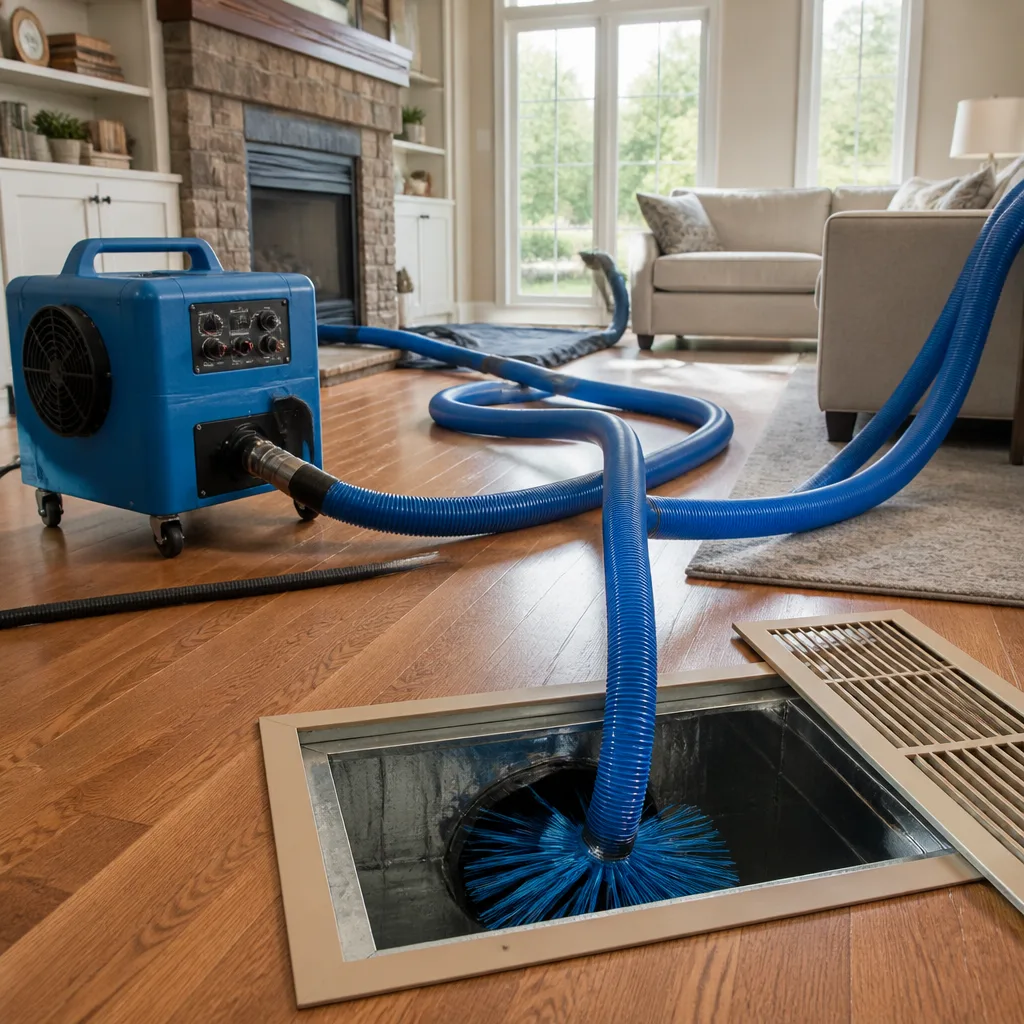 Whole-home duct cleaning
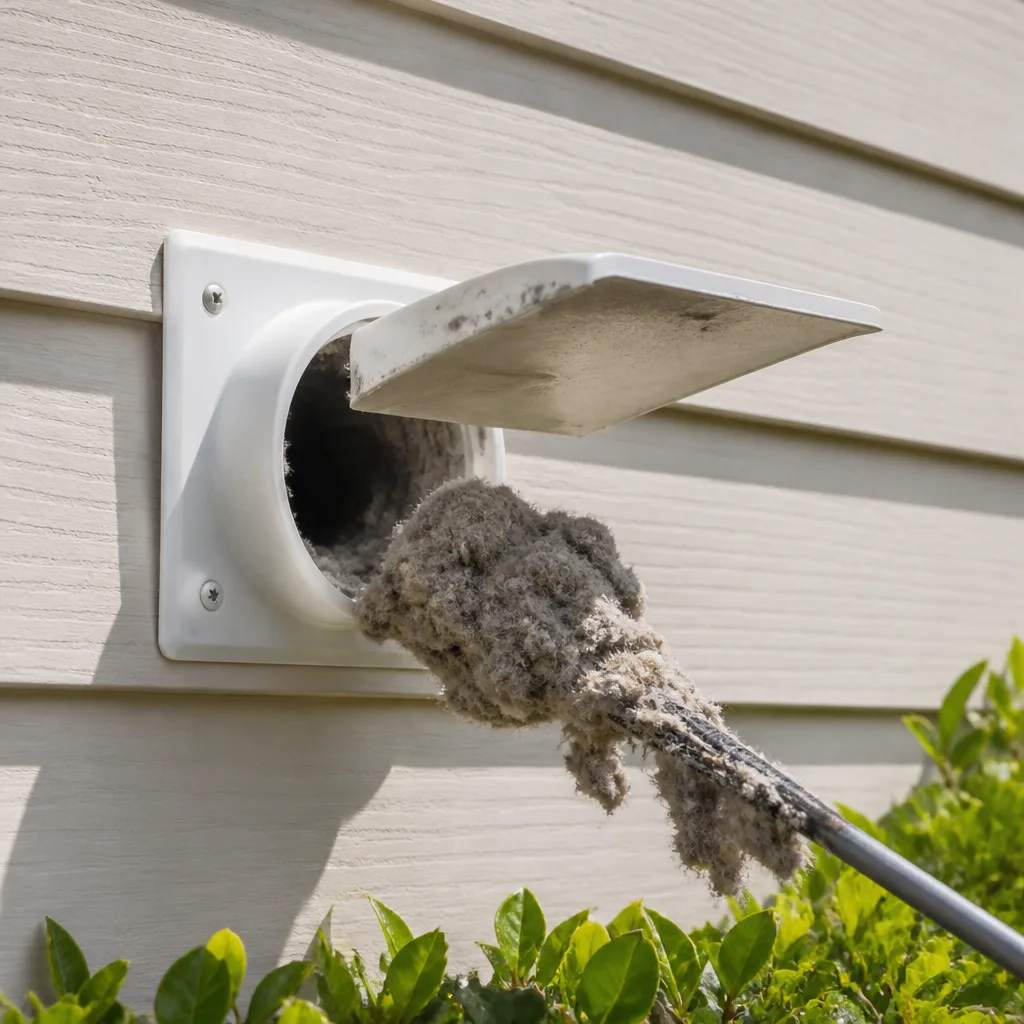 Dryer vent cleaning
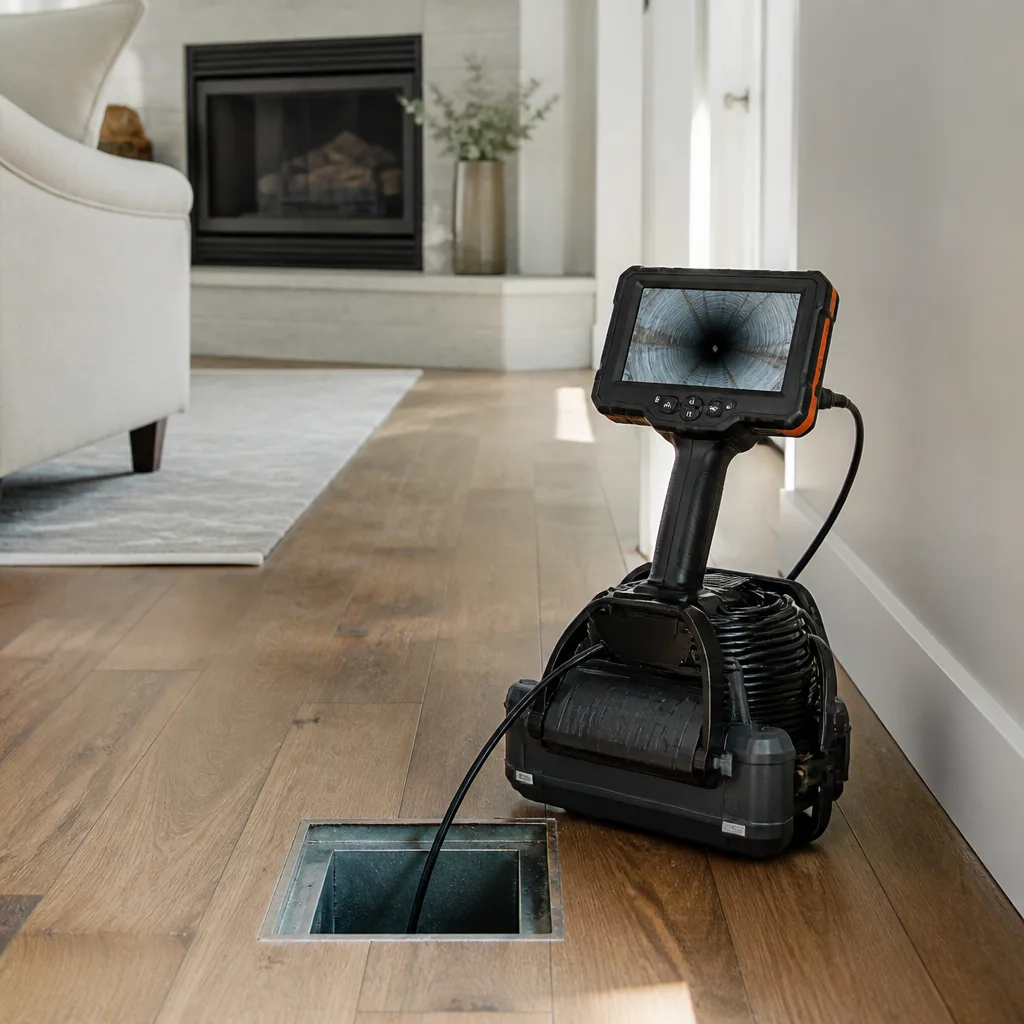 Camera inspection
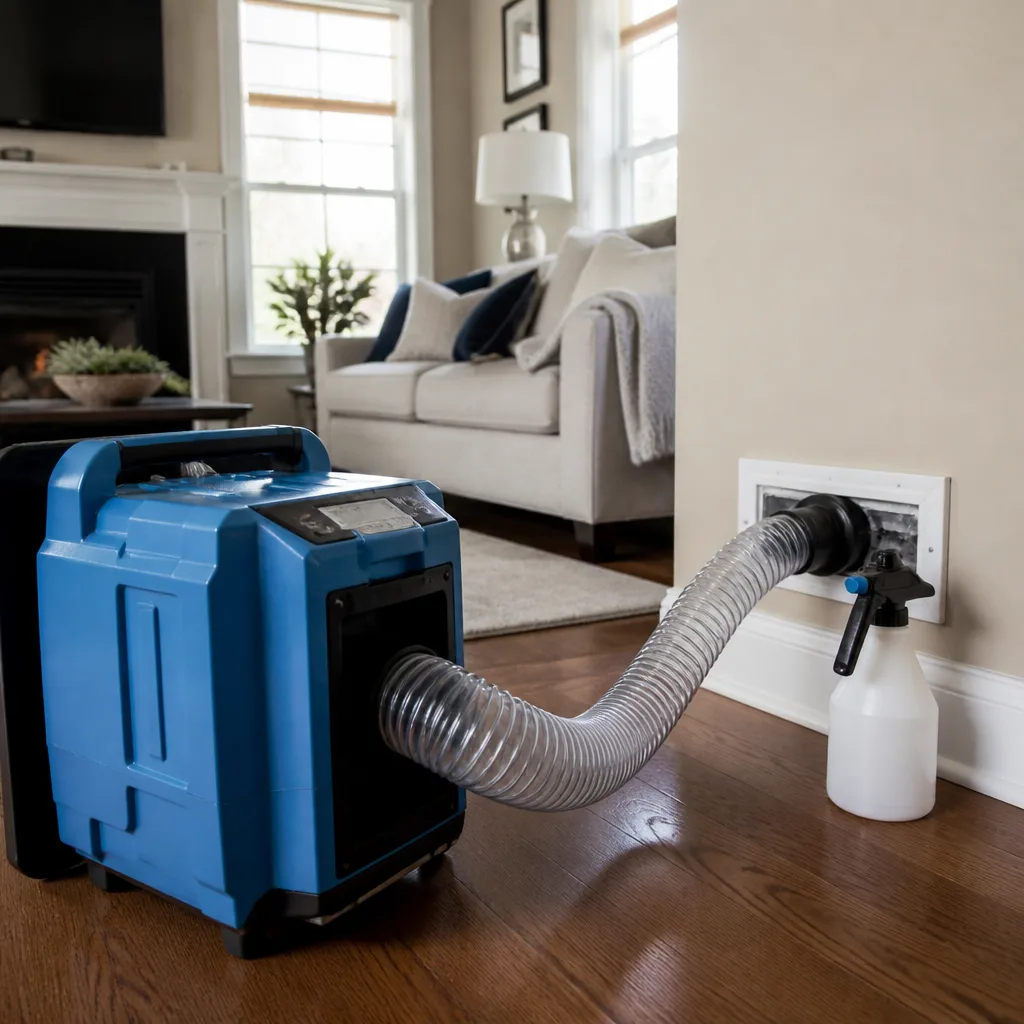 Sanitizing & deodorizing
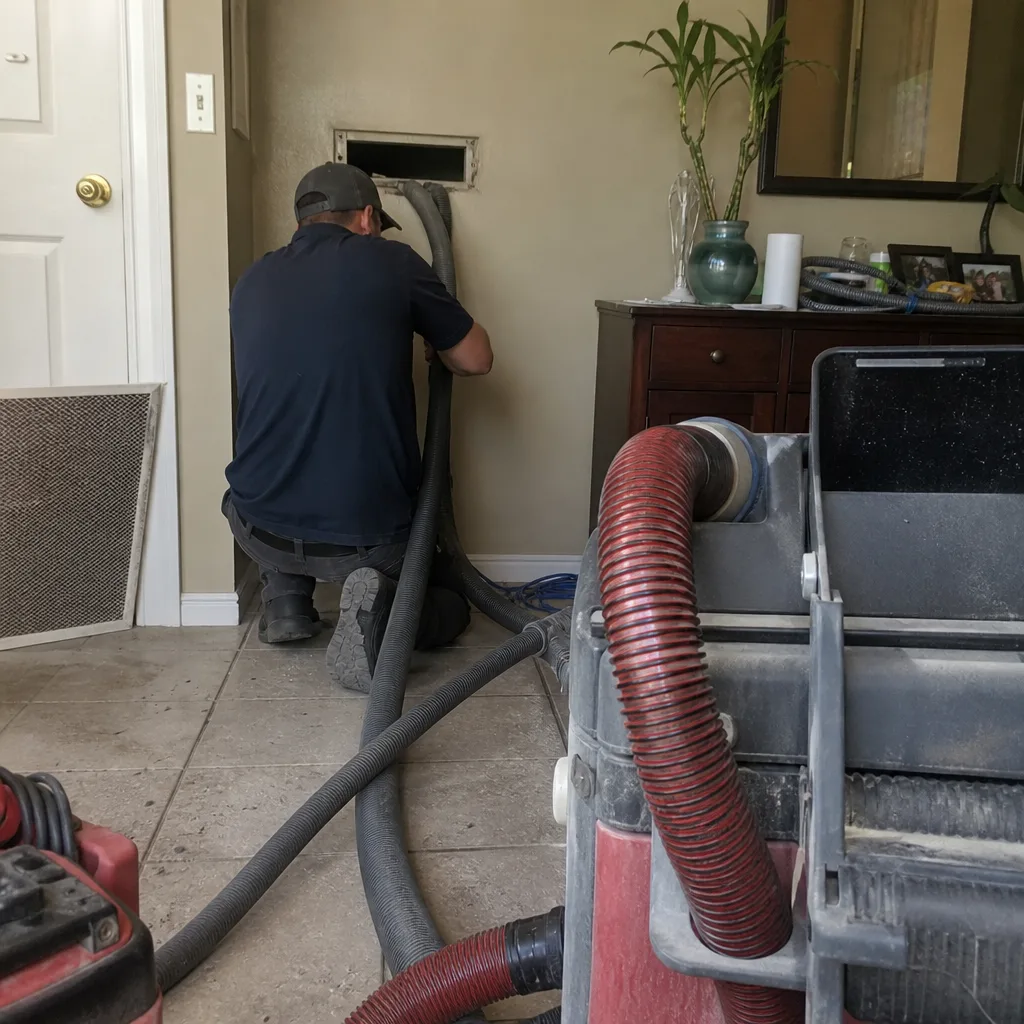
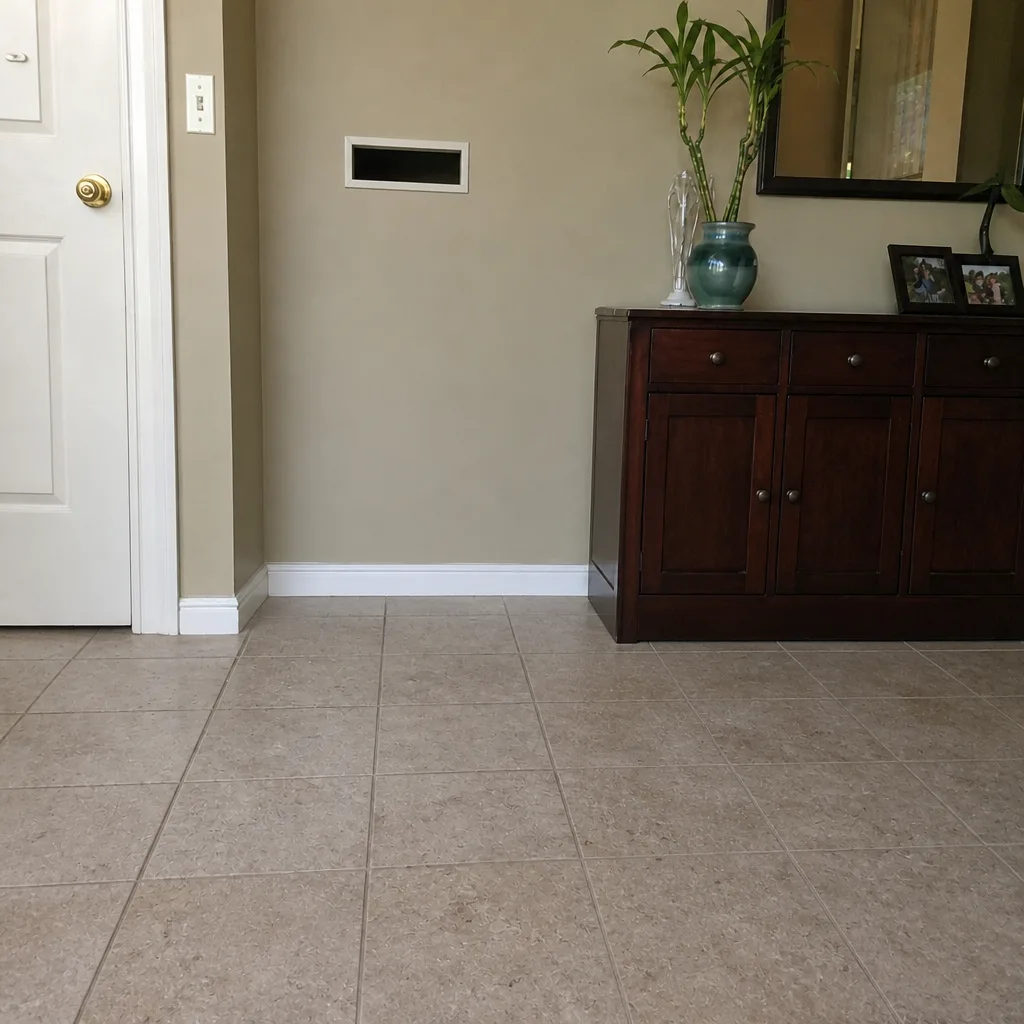
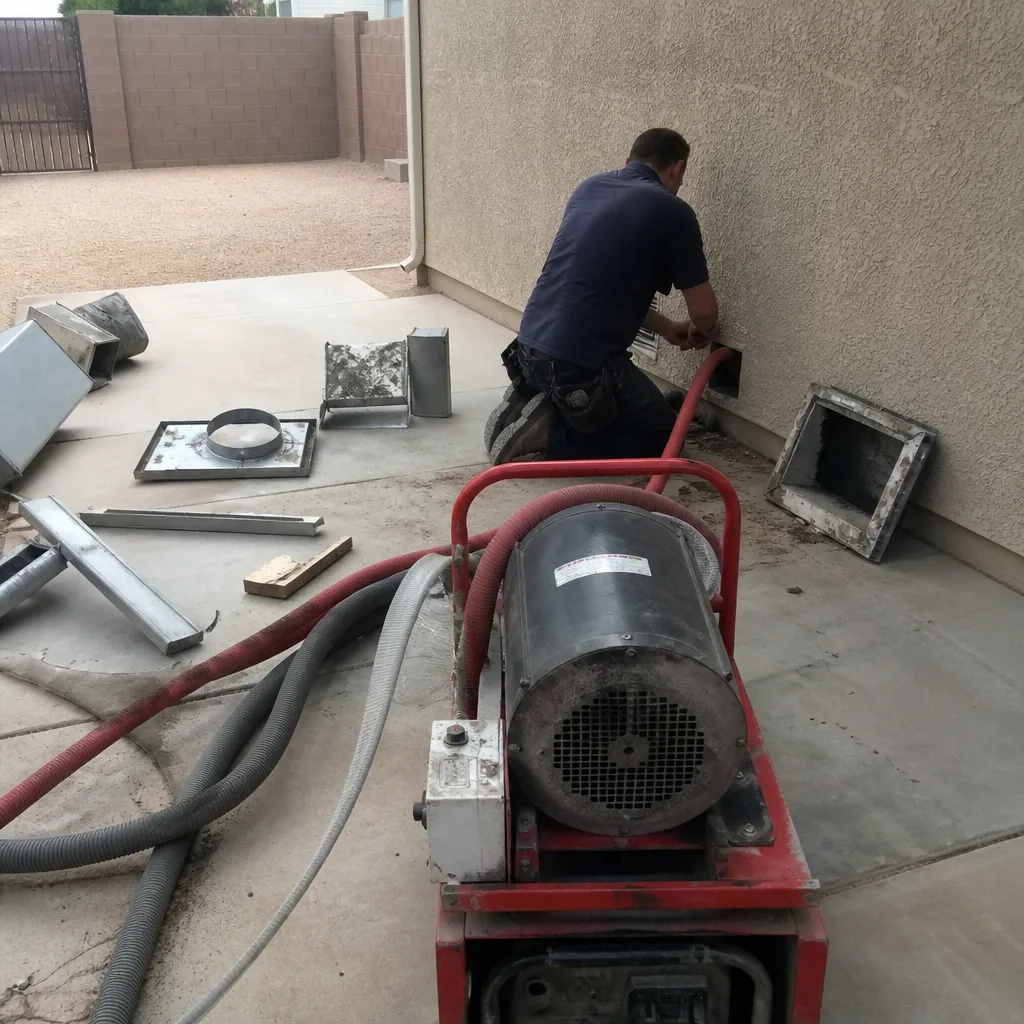
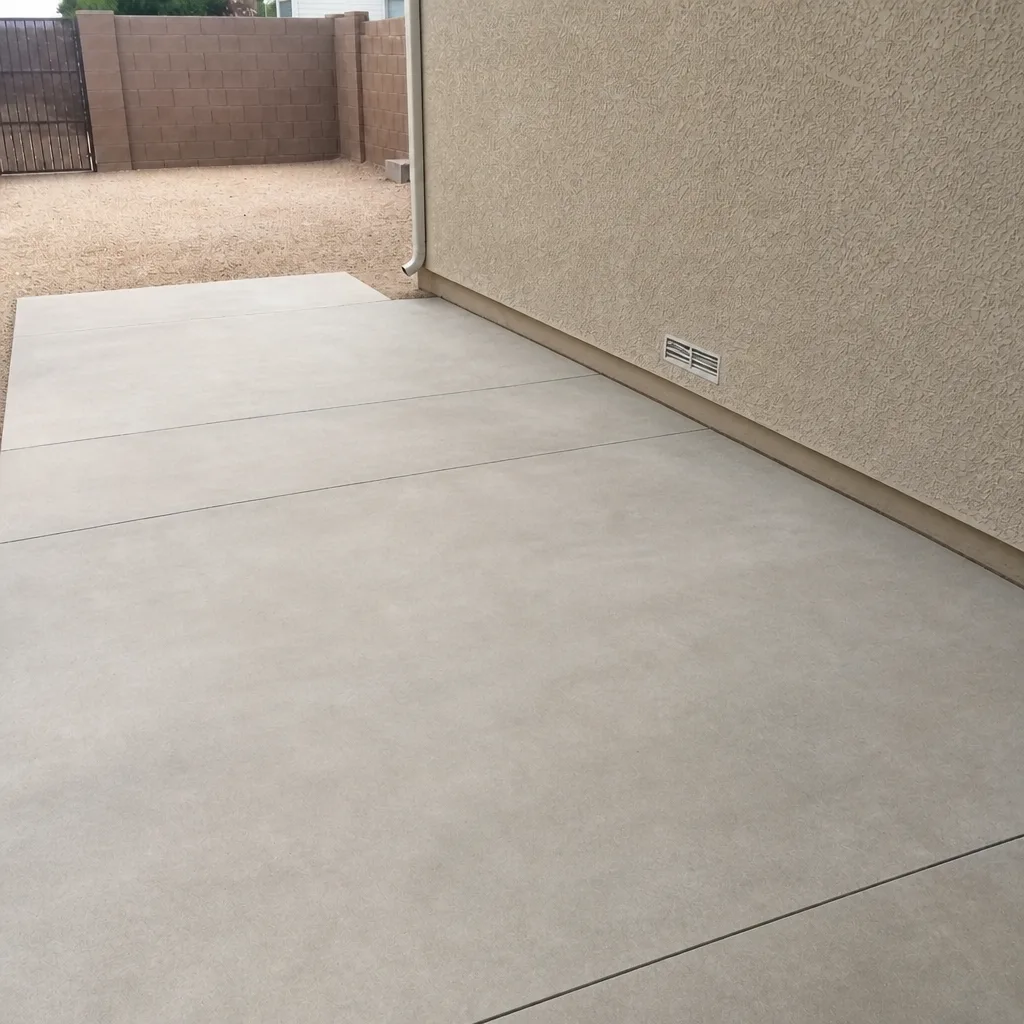
Whole-system duct and dryer vent check with before-and-after photos - you see exactly what came out of your vents
That "$99 whole-house special" is a bait ad - the real number appears once they are in your hallway, or the "clean" is a shop-vac at the register. We photograph the inside of your ducts before and after instead.
Air Duct Cleaning Warning Signs: A Surprise Homeowner’s Reference Guide
Most duct cleaning warning-signs lists tell you to watch for dust and musty smells, then stop there. That’s the problem. Dust on a supply register can mean the system is dirty, but it can also mean a disconnected duct section is pulling hot attic air straight into a bedroom, and no vacuum on earth fixes that. A musty smell can be mold growing on wet duct liner, or it can be a dead rodent in a return chase. The symptom looks the same. The fix is completely different. This guide decodes what those clues actually mean inside the ductwork of a Surprise home, and which ones point to a cleaning job versus a repair or moisture problem that cleaning alone can’t solve.
Quick Answer
Air duct cleaning warning signs in Surprise usually fall into four buckets: visible dust that keeps returning after a cleaning, uneven room temperatures, specific smells from certain registers, and unexplained spikes in summer cooling bills. The tricky part is telling a dirty system apart from a broken one. Dust that comes back fast often means a duct breach or attic bypass is introducing new debris, not that the cleaner did a poor job. Your next step is diagnosis, not another cleaning: figure out which of the four underlying causes you’re actually looking at before you book anyone.
Styles & brands we work with
- Whole-home duct cleaning
- Dryer vent cleaning
- Camera inspection
- Sanitizing & deodorizing
Table of Contents
- Dust Right After Cleaning: Settling vs. a Duct Breach
- What Uneven Room Temperatures Actually Tell You
- The Four Smells and What Each One Means
- Why Your Summer Bill Jumped: Leakage vs. Other Causes
- Dryer Vent Warning Signs Homeowners Misread
- When It’s Contamination, Not Just Dirt
- What Proper Equipment Looks Like in Your Home
- Common Mistakes to Avoid
- When to Call a Professional
- Frequently Asked Questions
Dust Right After Cleaning: Settling vs. a Duct Breach
A thin film of dust on your registers in the days after a cleaning is normal. Loose particles that were clinging to duct walls get disturbed and settle out over a week or two. That’s a settling pattern: it starts light, gets lighter, and stops. What’s not normal is a heavy, steady accumulation that never tapers off, or dust that shows up on horizontal surfaces in one specific room while the rest of the house stays clean.
That second pattern is the tell. Localized dust that keeps coming back usually means new air is being introduced upstream of that register, carrying debris with it. In a Surprise home, there are two common culprits.
Disconnected or crushed duct sections
Attic duct runs here take a beating. Flexible duct can sag, kink at a sharp turn, or pull loose at a collar joint. When a run is disconnected in the attic, the supply registers downstream of the break stop getting conditioned air and instead pull whatever is around them: attic dust, insulation fibers, and hot air. The dust settling in that room didn’t come from inside the ducts. It came through the gap.
Attic bypasses
An attic bypass is an open path between the attic and the living space. Sometimes it’s a gap around a duct boot where the drywall was cut oversized. Sometimes it’s a missing seal at the plenum. Either way, the air handler’s return side can pull air through that opening. You get dust, but you also get something worse: a pressure imbalance that undermines the whole system.
The diagnostic question is simple. If you had the system cleaned and the dust pattern in one room got worse instead of better, stop scheduling cleanings. Ask for a duct inspection. Cleaning a system with a breach just stirs air through a hole. For the broader intro to what a cleaning actually involves, see our air duct cleaning page.
What Uneven Room Temperatures Actually Tell You
A room that runs a few degrees warmer than the rest of the house in a Surprise summer is not always a duct problem. This is where most homeowners get misdiagnosed. Three separate things can cause the exact same symptom, and each has a different fix.
Cause one: duct condition
Leaky, crushed, or undersized duct runs deliver less conditioned air than they should. A bedroom at the end of a long flexible run is the classic victim. If the run has a kink or a loose joint, it bleeds cold air into the attic before it ever reaches the register. You feel warm air at the vent because that’s mostly all that’s coming out.
Cause two: HVAC sizing
An air handler that’s undersized for the square footage can’t keep up on a peak afternoon, and the last rooms on the trunk line suffer first. No amount of duct cleaning changes this. If the system short-cycles or never gets a room to temperature no matter what you do, sizing or equipment condition is worth checking with an HVAC contractor. Duct sealing can help performance but won’t fix a system that’s too small.
Cause three: insulation and envelope
A room over the garage, or one with a lot of west-facing glass, gains heat faster than the ducts can offset. So the warmer room might have perfectly clean, well-connected ducts and still feel warm at 4pm.
Here’s how to narrow it down before you call anyone:
- Check whether the warm room’s register has strong airflow compared to a cool room. Weak flow points to a duct problem; strong flow points to a load or insulation problem.
- Feel the air at the register, not the room. If it’s cool but the room stays warm, the ducts are delivering, and the issue is elsewhere.
- Look for a crushed or kinked run in the attic above that room specifically.
- Rule out a closed or blocked register and a dirty filter before assuming the worst.
Cleaning helps here only when the ducts themselves are restricted or heavily loaded. A duct inspection tells you which of the three causes you’re actually dealing with.
The Four Smells and What Each One Means
Smell is the most useful diagnostic clue a homeowner has, and the most misread. “Musty” gets used for everything. In our experience, four distinct odor profiles point to four different conditions inside the system.
1. Musty, wet-earth, or dirty-sock smell
This is the mold profile. It usually means moisture is present somewhere in the system: wet duct liner, condensation in a pan, or a damp return chase. The key point is that cleaning alone doesn’t solve a moisture problem. If the source stays wet, growth returns. The smell has to be paired with a moisture source found and corrected, not just masked.
2. Sharp, ammonia-like, or urine smell
This often points to rodent intrusion. Animals get into duct systems through gaps and openings, and the smell concentrates at the registers closest to where they got in. You may also find droppings near a return or chew marks on flexible duct. This is a containment situation, not a routine cleaning: the debris has to be removed under controlled conditions, which is why negative-pressure equipment matters. We use Abatement Technologies containment equipment for jobs like this so contaminated air isn’t blown into the living space during the work.
3. A burnt, hot-metal, or scorched smell that shows up when the system runs
This one deserves a fast response. A burnt smell at startup can indicate debris contacting the heat exchanger or motor windings overheating. Shut the system off and get it looked at by an HVAC professional before running it again. Duct cleaning isn’t the answer to that smell; diagnosis is.
4. A fiberglass or chemical smell
Internal duct liner can degrade over time, and when it does it sheds fibers and off-gasses. If the smell is faintly chemical and shows up mostly when the fan runs, liner condition is worth inspecting. This often pairs with the dust-that-keeps-returning problem, since a failing liner adds particles to the airstream.
Whatever the smell, note which registers it comes from and whether it’s constant or only at fan startup. That detail saves time on diagnosis. Our Duct Cleaning Surprise hub covers the full picture of how these jobs get triaged.
Why Your Summer Bill Jumped: Leakage vs. Other Causes
A sudden spike in a Surprise summer cooling bill correlates with two things most reliably: the system working harder against a duct leak, and the system working harder because of a dirty filter or restricted airflow. Cooling season here is long and demanding, so inefficiency compounds across months rather than days. A modest leak that wastes a little air on a mild day wastes a lot when the system runs all afternoon.
How to tell whether duct leakage is your cause, and not just weather or a rate change:
- Compare the same month year over year, not month to month. A rate increase or a hotter-than-usual stretch can move the bill without any change in the house.
- Look for a bill jump paired with a performance complaint. If the bill rose and some rooms stopped getting cool at the same time, leakage moves up the list.
- Check the obvious first. A clogged filter, a closed damper, or a tripped breaker can all raise runtime. Rule them out before assuming a duct problem.
- Watch for rooms that never quite catch up. A duct leaking in the attic loses cold air before the register, so the system runs longer trying to satisfy a thermostat.
Leakage on the return side is especially sneaky. It pulls hot attic air into the system, so the air handler cools air that’s already too warm. The duct itself can look fine from inside the register. This is one of the reasons a proper inspection beats a guess, and part of the value of pairing cleaning with real duct repair when a break is found. A leak is a repair question as much as a cleaning one.
Dryer Vent Warning Signs Homeowners Misread
Dryer vent problems get mistaken for appliance failures all the time. A dryer that takes two cycles to dry a load, or shuts off hot, is often blamed on the machine when the vent is the real issue. And this is one of the most important warning signs to read correctly, because a clogged dryer vent addresses a leading household fire-risk source. Homeowners in Surprise routinely call an appliance tech when the fix is the vent.
Here are the signs that point to the vent rather than the dryer:
- Clothes take longer to dry, and it’s getting worse. A gradual decline over weeks points to a slow buildup of lint in the run.
- The dryer exterior feels hot to the touch. Heat that should be venting outdoors is trapped.
- The laundry area feels humid or smells like lint after a load. That’s moisture coming back into the room instead of going outside.
- Lint is collecting around the outside vent hood or accumulating inside the flexible transition duct behind the dryer.
- The dryer shuts off early on a thermal limit. That’s the safety mechanism doing its job; the vent is restricting airflow.
What makes this a “warning sign” rather than a nuisance is the fire risk. Lint is highly combustible, and heat plus restricted airflow is the exact combination that starts dryer fires. If two or more of these signs show up together, get the vent cleared rather than running the dryer again. We handle dryer vent cleaning as part of the full-system picture, so it doesn’t get skipped in favor of the ducts. From the duct to the dryer vent, it’s the same visit.
When It’s Contamination, Not Just Dirt
There’s a difference between a dirty duct system and a contaminated one, and the distinction changes how the job needs to be done. Normal dirt is dust, hair, and general household debris. Contamination is dust from a renovation, mold particles from a moisture event, or air affected by a remediation situation. A system with contamination shouldn’t just get vacuumed while the fan runs and the house is occupied.
The signs that you’re looking at contamination rather than ordinary dirt:
- Recent renovation or remodeling work, especially drywall cutting, sanding, or demolition, with dust still circulating weeks later.
- Visible mold growth found during a separate inspection, or a persistent mold smell that returns after surface cleaning.
- Rodent intrusion evidence in the ducts themselves.
- A remediation or flood situation in the home’s recent past.
This is where equipment matters. Contaminated-air scenarios get handled with proper negative-pressure protocol so the debris leaves the system instead of floating into your living room. We use Abatement Technologies containment setups for exactly these jobs, and a HEPA-rated vacuum like our Nikro systems captures particles at the source rather than recirculating them. Thin consumer equipment and a shop vac don’t do this. If you’re in a Surprise home and a renovation or moisture event has left you unsure which situation you’re in, that’s the point to ask for an inspection instead of a cleaning quote.
What Proper Equipment Looks Like in Your Home
If you take one thing from this guide, take this: the equipment tells you which warnings a cleaning can actually resolve. Warning signs don’t get fixed by a cheap vac-and-dash visit. They get fixed by the right tool for the condition, and you should know what that looks like before anyone arrives.
Here’s the checklist for contractor-grade work versus surface work:
- Agitation, not just suction. A rotary brush system (we run Rotobrush, the industry benchmark for mechanical duct agitation) physically loosens debris from duct walls. A vacuum alone can’t move what’s stuck.
- HEPA-rated capture, not a shop vac. Our Nikro HEPA vacuum systems trap fine particles rather than blowing them back into the room. This is what stops the “cleaning made the dust worse” complaint.
- Containment for contamination jobs. Negative-pressure setups using Abatement Technologies equipment keep contaminated air from spreading during the work.
- Repair capability, not just cleaning. If the warning sign is a disconnected or crushed duct, the job is repair. A cleaner who only cleans will leave the breach in place. We clean it, and if it’s broken, we fix it.
- Filtration knowledge for the next step. Familiarity with Honeywell and Aprilaire products means we can advise on whole-home filtration upgrades if the air quality issue goes beyond a single cleaning.
None of this is about a longer sales pitch. It’s about matching the warning sign to the right fix. Ask any contractor you interview what equipment they’re using and whether they do repair. The answer tells you everything. For a broader picture of the service in this area, the Surprise page covers local expectations.
Common Mistakes to Avoid
- Booking a second cleaning before diagnosing a recurring dust problem. If dust returns fast after a cleaning, the cause is almost always a breach or bypass. Another cleaning pays for the symptom, not the fix. Get an inspection first.
- Assuming every warm room needs duct cleaning. A warm room over the garage or facing west may have clean, connected ducts and a load problem instead. Rule out airflow and insulation before spending on cleaning.
- Treating a musty smell with surface cleaning only. The moisture source has to be found and corrected. In a Surprise home, that moisture often comes from duct liner or a pan, not from outside air. Masking the smell doesn’t solve the mold.
- Ignoring a burnt smell at system startup. That smell is a shutdown-and-diagnose signal, not a cleaning signal. Don’t run the system waiting for an appointment.
- Mistaking a dryer vent problem for a dryer problem. If clothes take longer to dry and the vent hood shows lint buildup, the vent is the issue. Running the dryer while it happens adds to the fire risk.
- Hiring on price alone without asking about equipment. The gap between contractor-grade equipment and consumer gear shows up in results, especially on contamination and repair jobs. Ask what they’ll actually use in your home.
- Skipping the dryer vent because the ducts are the main event. Full-system coverage catches problems a duct-only visit misses. From the duct to the dryer vent, it’s one coordinated visit.
When to Call a Professional
Some warning signs resolve on their own; most don’t. Call a professional when dust keeps returning to one room after a cleaning, when a room stays warm even though the register airflow feels strong and the ducts look connected, or when a distinct smell shows up at a specific register. Call sooner if the smell is urine-like (rodent intrusion) or burnt (a possible heat-exchanger or motor issue, which needs an HVAC professional). Book dryer vent cleaning promptly if drying times have stretched and lint is collecting at the outdoor vent. If a renovation or moisture event recently affected the home and you’re unsure whether it’s contamination, ask for an inspection rather than a cleaning quote. Duct Cleaning Surprise offers free estimates in Surprise: call (866) 942-6251. We answer 24/7. Fast dispatch from 7am to 7pm, Sunday through Friday. Our technicians have up to 11 years of experience with contractor-grade equipment, and we clean it, and if it’s broken, we fix it.
Frequently Asked Questions
If dust returns quickly to a single room, or one room stays warm even when the register airflow feels strong, the issue is more likely a duct break or bypass than ordinary dirt. Cleaning addresses buildup; repair fixes a disconnected or crushed run. The way to tell is an inspection that looks inside the system for breaches, not just a visual read at the register. Call (866) 942-6251 for an exact quote, and the estimate is free.
A light film that fades over a week or two is normal settling from the particles disturbed during cleaning. Heavy dust that keeps accumulating, especially in one room, is a different signal: it usually means attic air is being pulled in through a breach or bypass. That points to repair, not another cleaning. Call (866) 942-6251 to book an inspection; estimates are free.
A musty, wet-earth smell usually points to moisture in the system, most often wet duct liner or a damp return. Cleaning alone won’t fix it, because if the moisture source stays, growth comes back. The job is finding and correcting the moisture, then dealing with the system. Call (866) 942-6251 for an exact quote, and estimates are free.
A jump paired with rooms that stopped cooling points to duct leakage, while a jump with nothing else changed often comes back to a dirty filter, a closed damper, or a rate change. Long cooling seasons here make small leaks expensive over time, which is why an inspection is worth it before the bill climbs again. Call (866) 942-6251 to schedule; estimates are free.
If the dryer takes longer and longer to dry a load, feels hot outside, and lint collects at the outdoor hood, the vent is the likely cause rather than the machine. Running it while restricted adds to the fire risk. From the duct to the dryer vent, we handle both in one visit. Call (866) 942-6251 for an exact quote, free estimate.
No. A shop vac can’t agitate debris from duct walls and won’t contain fine particles, so it tends to put dust back into the room. Contractor-grade agitation and HEPA-rated capture are what actually remove buildup instead of spreading it. Call (866) 942-6251 for an exact quote, and estimates are free.
See the difference
 Before
 After
 Before
 After
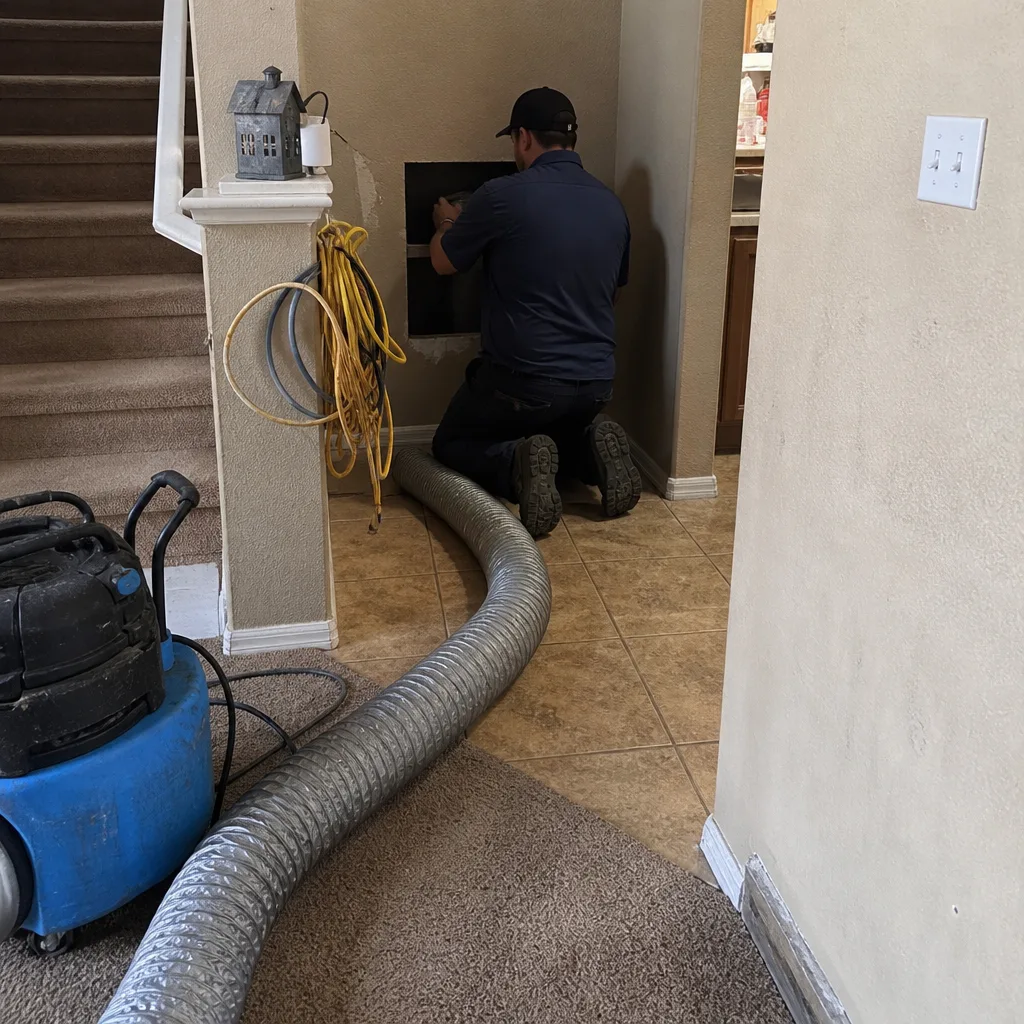 Before
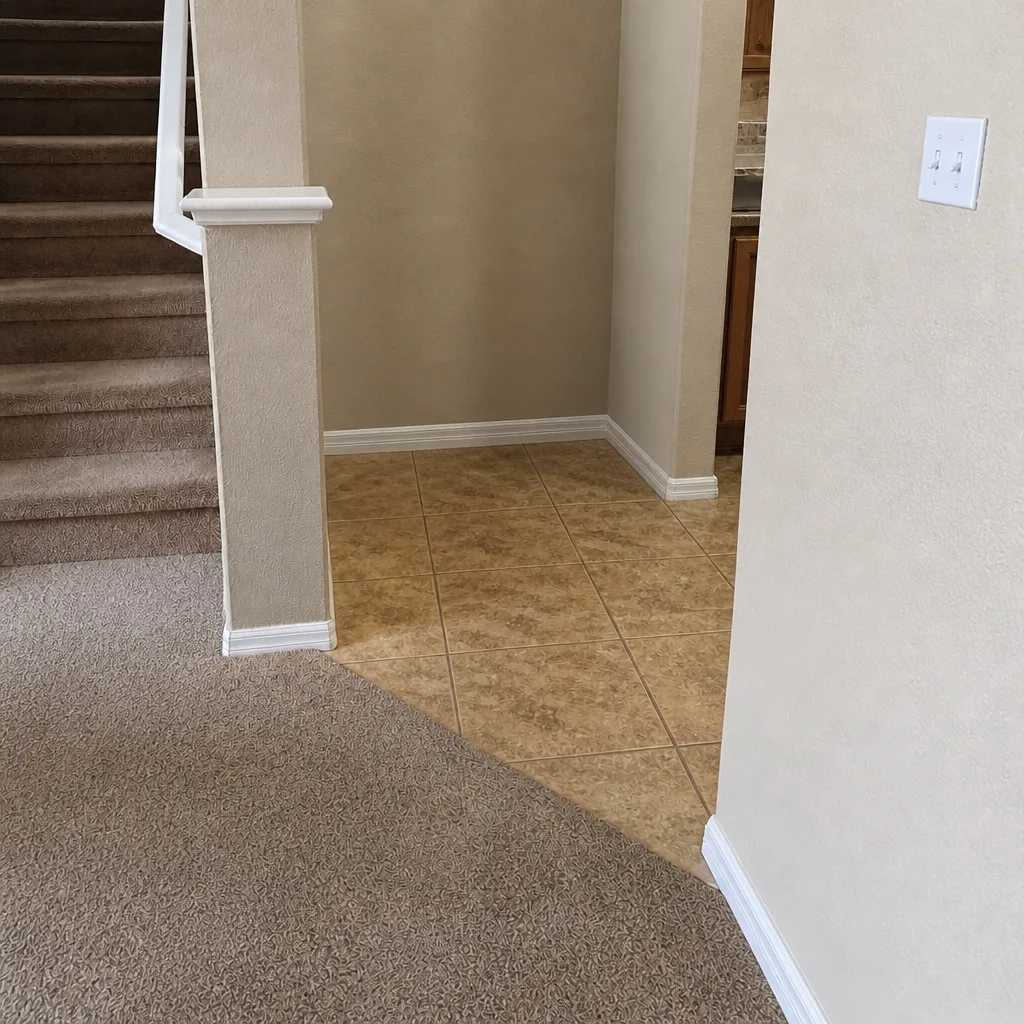 After
The Bottom Line
Warning signs aren’t all cleaning signs. Recurring dust often means a breach or bypass that needs repair, uneven temperatures can come from duct condition, HVAC sizing, or insulation, and each of the four smell profiles points to a different cause: moisture, rodents, a heat issue, or failing liner. Summer bill spikes are worth checking against duct leakage, and dryer vent problems get misread as appliance failures more than any other sign. Match the clue to the cause before you book anything, and ask what equipment will be used in your home. If a renovation or moisture event left you unsure, an inspection is the answer, not another cleaning.
Contact
If any of these warning signs sound familiar, call Duct Cleaning Surprise at (866) 942-6251 for a free estimate. We answer 24/7. Fast dispatch from 7am to 7pm, Sunday through Friday. We run contractor-grade Rotobrush and Nikro equipment, handle contamination with Abatement Technologies containment, and do repair along with cleaning, so a broken duct doesn’t get left behind. Contractor-grade equipment, residential pricing, and before-and-after photos of your own ducts so you know the work was done.
Written by the team at Duct Cleaning Surprise.